If you've sourced leather for more than a few orders, you've likely seen "LWG-certified" listed as a selling point. Most buyers know it signals something about sustainability — fewer know exactly what it audits, how the rating tiers work, or what questions to ask a supplier who claims certification. Here's the breakdown.
What Is the Leather Working Group?
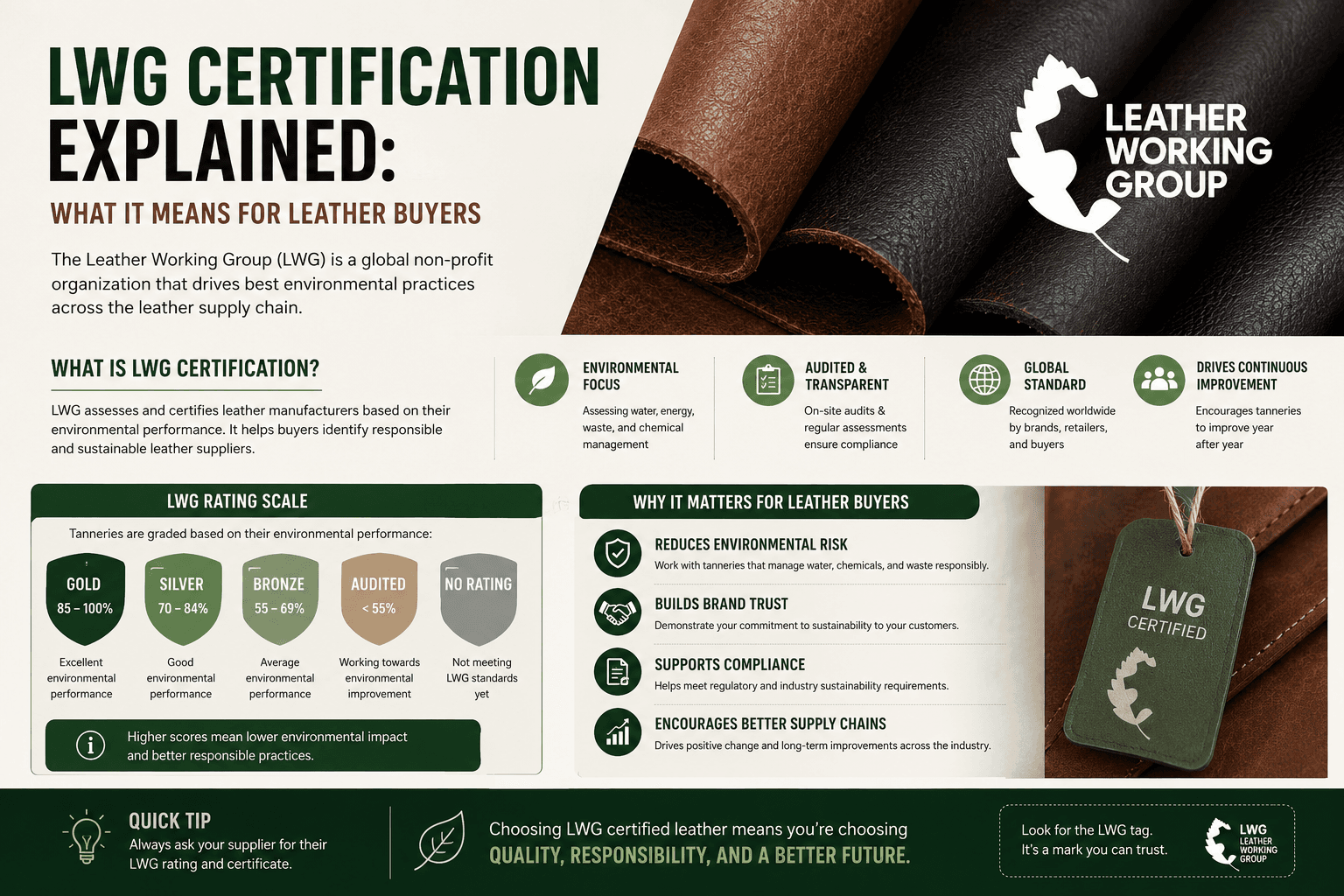
The Leather Working Group (LWG) is a multi-stakeholder, not-for-profit organization that runs the leather industry's most widely recognized environmental certification. It audits tanneries against a standardized protocol covering water usage, energy consumption, chemical management, effluent (wastewater) treatment, and traceability of hides back to their source.
It's important to understand what LWG certifies and what it doesn't: it's an environmental and traceability audit of the tannery, not a certification of the finished leather's grade, feel, or durability. A tannery can be LWG Gold-rated and still produce leather across a wide range of qualities — the certification tells you about the process, not the product spec.
The LWG Rating Tiers
Certified tanneries receive one of four ratings based on audit score:
- Gold: the highest tier, requiring strong performance across all audited categories - Silver: strong performance with some areas for improvement - Bronze: meets the baseline requirements but with more significant gaps - Audited (previously "Compliant"): has completed the audit process but scored below Bronze A tannery's rating is publicly listed on the LWG website with an expiration date — certifications are re-audited periodically, so it's worth checking that a supplier's certification is current, not just referencing a rating from several years ago.
Why It Matters for Buyers
For brands selling into the EU, UK, or US, LWG certification has increasingly become less of a differentiator and more of a baseline expectation, especially for retailers with ESG (environmental, social, governance) reporting requirements. Sourcing from an LWG-certified tannery gives buyers:
- Audit trail documentation they can pass on to their own compliance or sustainability teams - Traceability data on where hides originated - Reduced risk of chemical non-compliance issues (particularly around chromium VI, a regulated substance in tanning) ## LWG vs. REACH: Two Different Things
These two are often mentioned together, but they answer different questions:
| What It Covers | |
|---|---|
| LWG | Tannery's environmental practices, water/energy/chemical management, traceability |
| REACH | Chemical safety compliance of the finished leather (EU regulation), tested per batch/shipment |
A tannery can be LWG-certified and still need to provide separate REACH test reports for a specific shipment. Don't assume one covers the other — ask for both if your market requires them.
Questions to Ask a Supplier Claiming LWG Certification
1. What is the current rating (Gold, Silver, Bronze, Audited), and when does it expire? 2. Can you provide the LWG certificate or a link to the public listing? 3. Is the certification for this specific tannery, or a parent group with multiple facilities? 4. Do you provide REACH test reports per shipment, separate from the LWG audit? If a supplier is vague about which tier they hold or can't produce documentation, treat "LWG-certified" as a claim to verify, not a fact to accept.
Final Thoughts
LWG certification is one of the clearer signals of tannery-level accountability in an industry where "sustainable" and "eco-friendly" are often used loosely. It doesn't replace due diligence on leather grade or quality, but paired with a documented QC process, it gives buyers a real basis for trusting a supplier's environmental claims — not just their word for it.