One of the most common questions from first-time leather buyers isn't about grade or finish — it's simpler: how much do I need to order, how long will it take, and what should I budget? Here's a realistic breakdown based on how wholesale leather sourcing typically works.
What Is MOQ, and Why Does It Exist?
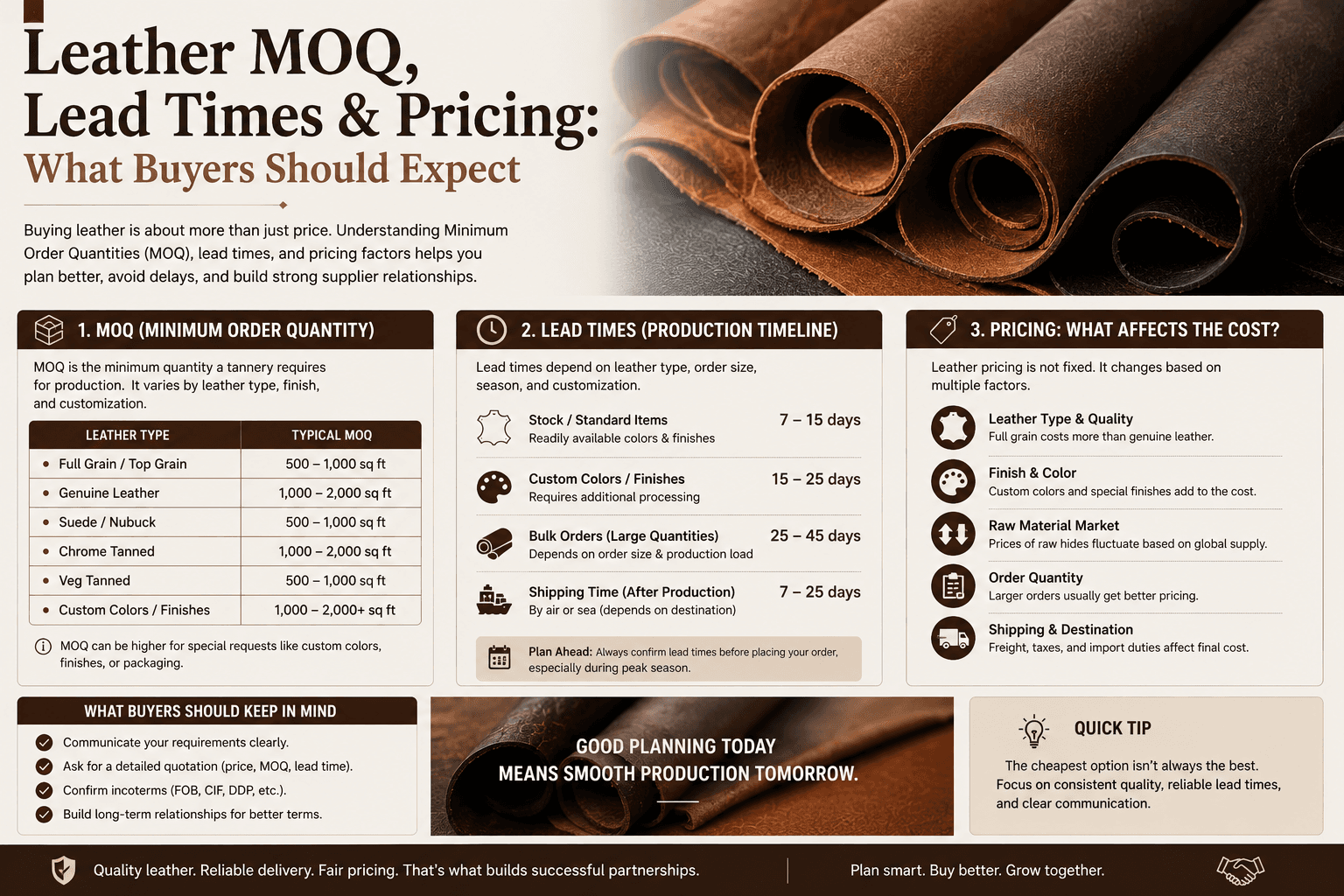
MOQ (Minimum Order Quantity) is the smallest amount a supplier will produce or sell in a single order, usually measured in square feet for leather. MOQs exist because tanning is a batch process — running a smaller quantity through the same chemical, labor, and equipment setup isn't cost-effective for the tannery, so suppliers set a floor that makes production worthwhile.
Typical MOQs vary by leather type and finish:
| Leather Type | Typical MOQ |
|---|---|
| Full-grain cow (upholstery) | ~1,500 sq ft |
| Vegetable-tanned cow (bags/belts) | ~800 sq ft |
| Goat nappa (garments) | ~2,000 sq ft |
| Buffalo nubuck (footwear) | ~1,200 sq ft |
These numbers vary between suppliers, but they give a realistic starting point for budgeting a first order. If your required quantity is below a supplier's MOQ, it's worth asking directly — some will accommodate smaller trial orders at a slightly higher per-unit price, especially for new buyer relationships.
How Lead Times Break Down
A full order, from inquiry to shipment, typically moves through these stages:
1. Inquiry and feasibility confirmation — same day to 24 hours 2. Itemized quote — within 24 hours 3. Physical sample shipped — 3–7 days 4. Order confirmation and production scheduling — 1–2 days after sample approval 5. Production (cutting, tanning, finishing) — 2–4 weeks depending on quantity and finish complexity 6. Quality inspection — 1–3 days 7. Shipping — varies by Incoterm and destination End to end, buyers should budget 5–7 weeks from first inquiry to shipment for a standard order, longer for complex finishes or larger quantities. Rushing this timeline usually means skipping the sample stage — which is where most quality mismatches get caught before they become expensive problems.
What Drives Leather Pricing
Price per square foot depends on several factors, and understanding them helps you evaluate whether a quote is reasonable:
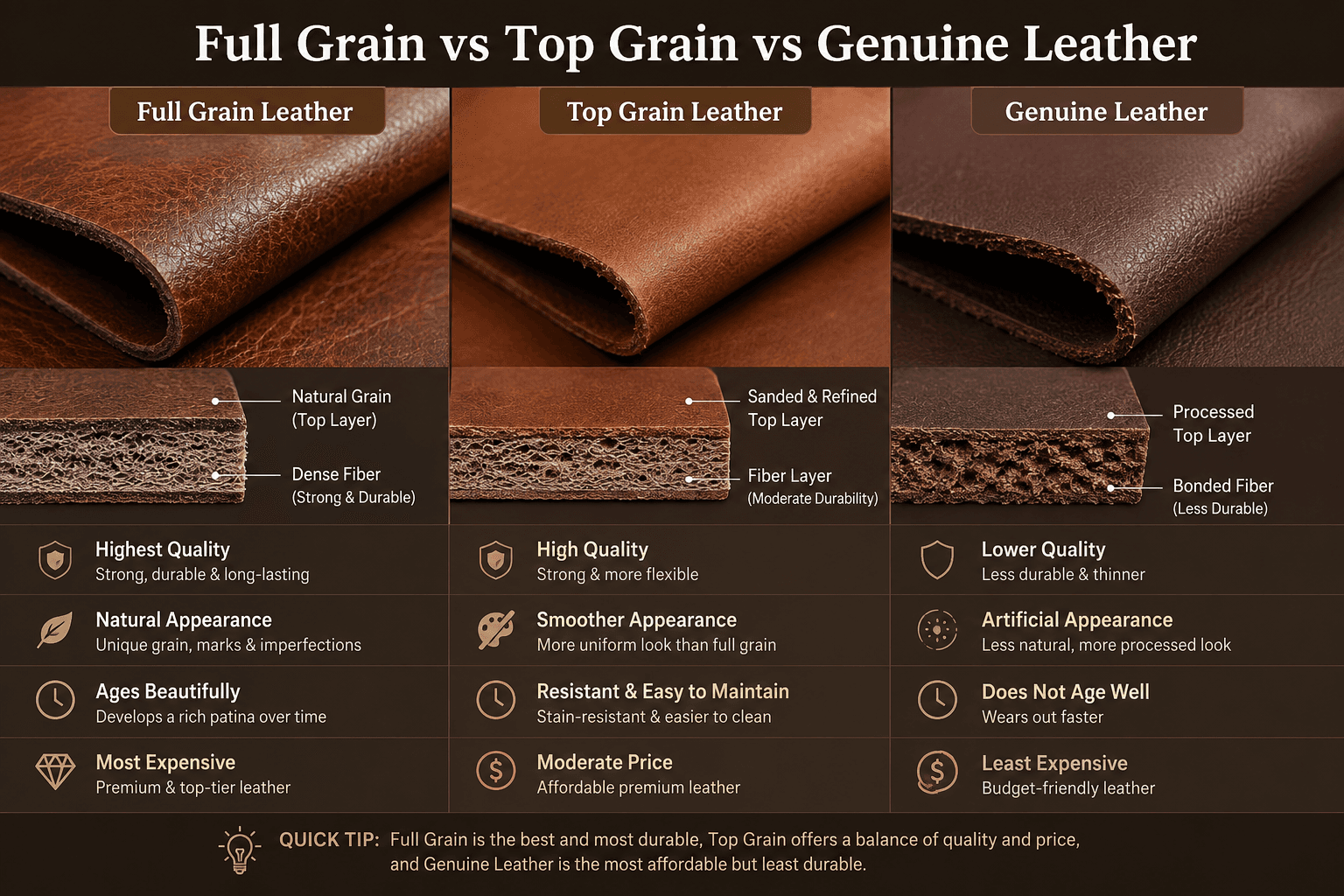
- Hide type: goat and calf typically command higher prices per square foot than cow or buffalo due to supply and finer grain - Tanning method: vegetable tanning is generally slower and costs more than chrome tanning - Finish: full-grain and aniline finishes cost more than corrected-grain or heavily pigmented finishes - Thickness: thicker leather uses more raw hide per square foot - Grading and defect tolerance: tighter defect tolerances (fewer imperfections per square foot) mean more hides are rejected or downgraded during selection, raising the effective cost of the accepted stock - Order volume: larger orders typically get better per-unit pricing due to production efficiency Buyers comparing quotes across suppliers should make sure they're comparing the same spec — a lower price is often a lower grade, thinner hide, or wider defect tolerance, not just a better deal.
Questions to Ask Before Committing
- What is your MOQ for this specific article, and is it flexible for a first order? - What is the full lead time from confirmed order to ready-to-ship? - Does the quoted price include finishing, or is that a separate line item? - What Incoterm is this price based on (FOB, CIF, EXW)? ## Final Thoughts
MOQs, lead times, and pricing in leather sourcing aren't arbitrary — they reflect the real mechanics of batch tanning and finishing. Buyers who go in with realistic expectations on quantity and timeline, and who ask for itemized pricing rather than a single bundled number, are in a much stronger position to compare suppliers fairly and avoid surprises mid-order.