"Genuine leather" sounds like a quality guarantee. It isn't — it's actually the third-lowest grade in the leather hierarchy. If you're sourcing leather for upholstery, bags, footwear, or garments, understanding these grade names is essential to specifying the right material and avoiding paying premium prices for something that isn't premium at all.
The Leather Grading Hierarchy
Leather grades are determined by how much of the hide's original surface (the grain) is retained during processing, and how the hide is split.
1. Full-Grain Leather
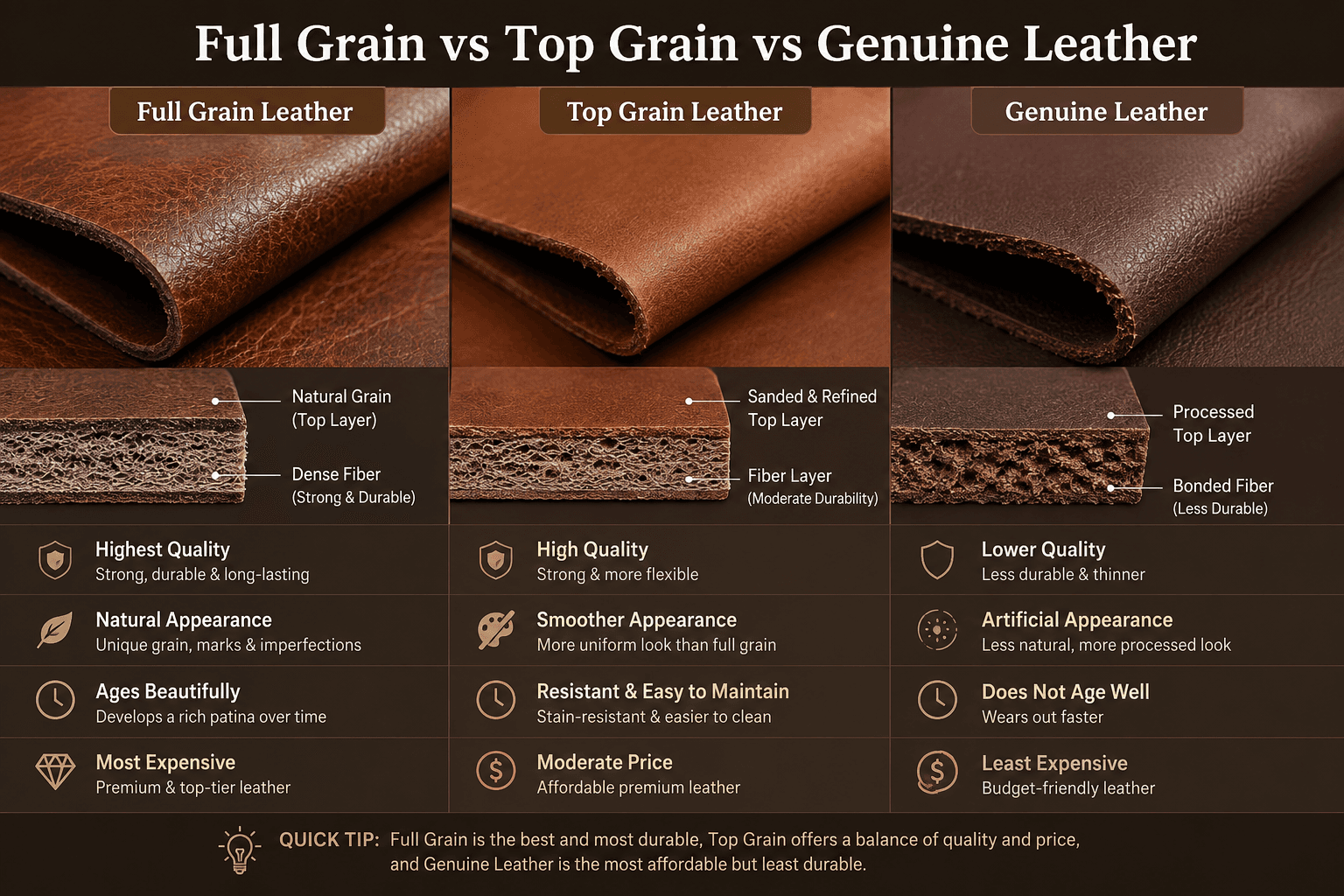
Full-grain leather uses the top layer of the hide with the grain completely intact — no sanding, buffing, or corrected surface. This means natural markings, slight variations, and the tightest fiber structure of any grade, which translates directly into the best durability and the most distinctive character over time (it develops a patina with use).
- Best for: high-end upholstery, premium bags, belts, boots - Trade-off: higher cost, and natural imperfections are visible (which many buyers now see as a feature, not a flaw) ### 2. Top-Grain Leather
Top-grain leather is also from the top layer of the hide, but the surface is sanded and often has a finish coat applied to even out imperfections. It's thinner and more flexible than full-grain, and more resistant to staining because of the finish layer — but it loses some of the natural fiber strength and won't develop the same patina.
- Best for: mid-to-high-end bags, jackets, and furniture where a more uniform, polished look is required - Trade-off: less durable long-term than full-grain, but more consistent in appearance across a production run ### 3. Genuine Leather
Despite the name, genuine leather is made from the layers left over after the top grain has been split away for higher grades. It's often coated or embossed to imitate a grain pattern. It's real leather (not synthetic), but it's the lower end of the durability and appearance spectrum.
- Best for: budget accessories, low-cost goods where price matters more than longevity - Trade-off: shorter lifespan, less resistant to wear, often can't be repaired or refinished ### 4. Bonded Leather (Not Covered Above, Worth Knowing)
Made from leftover leather scraps and fibers bonded together with adhesive and a polyurethane coating. It's the lowest grade and shouldn't be confused with any of the above — it's closer to a leather-look composite than a true leather product.
How to Choose the Right Grade for Your Product
| Product Type | Recommended Grade |
|---|---|
| Premium furniture, boots, belts | Full-grain |
| Mid-range bags, jackets | Top-grain |
| Budget accessories, linings | Genuine leather |
The right choice depends on your price point, expected product lifespan, and how your customers perceive quality. A full-grain hide costs more per square foot, but for a brand positioning around durability and craftsmanship, it's usually the only grade that supports that story credibly.
Questions to Ask Your Supplier
When requesting a quote, be specific about grade — don't just say "leather." Ask:
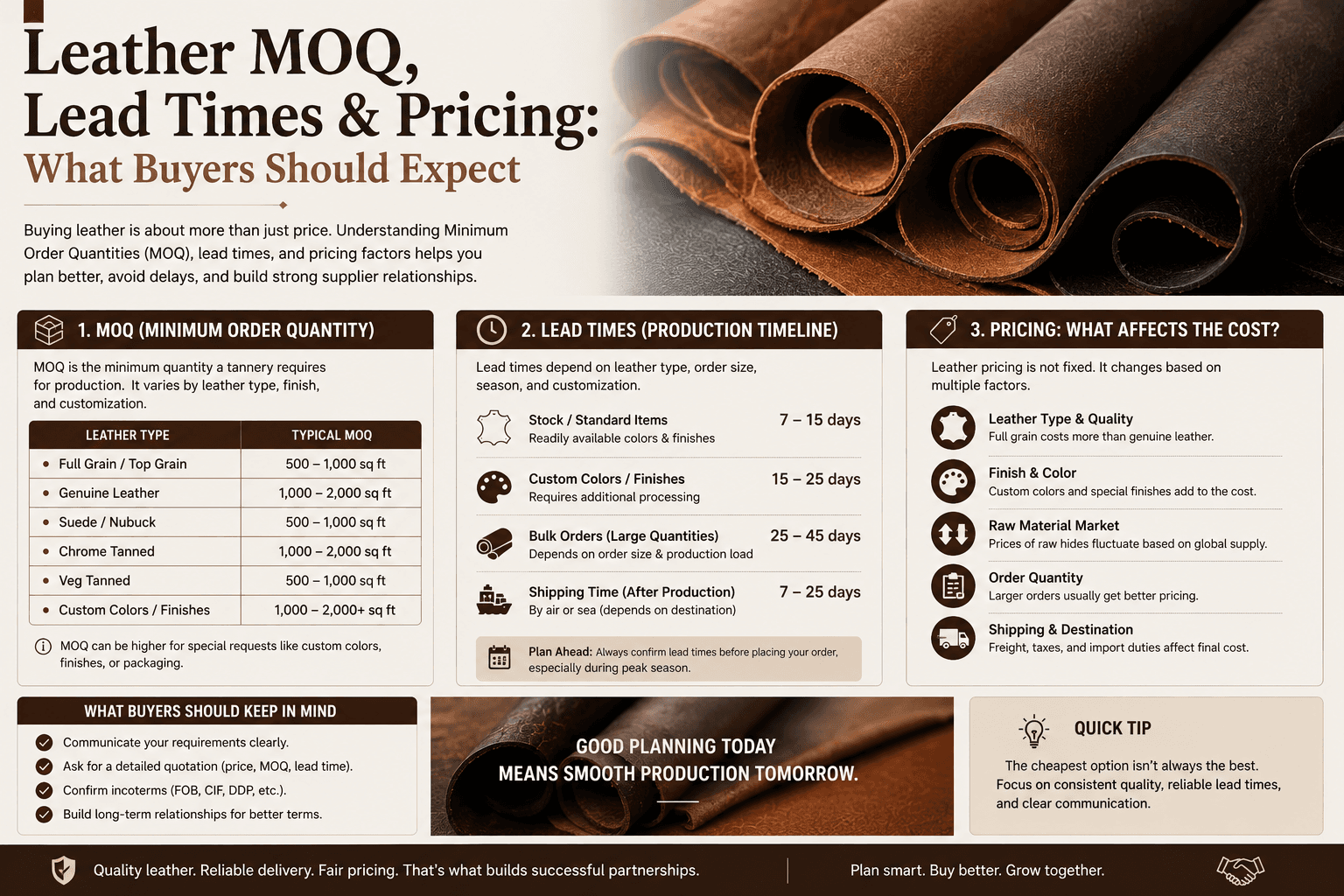
- Is this full-grain, top-grain, or corrected-grain? - What is the tanning method (chrome or vegetable)? - What is the thickness range, and is it consistent across the batch? - Can I see a sample before committing to the full order? A supplier who can answer these clearly and back them up with a physical sample is one worth working with. Vague answers about "quality leather" without specifying grade are a red flag.
Final Thoughts
Grade names in leather aren't marketing — they describe a real, physical difference in how the hide was processed, and that difference shows up in how the product performs over years of use. Knowing the difference means you can specify exactly what you need, compare quotes apples-to-apples, and avoid paying full-grain prices for a top-grain (or worse) product.