Pakistan is one of the world's largest leather exporters, and Kasur — a city in Punjab often called the country's "leather capital" — supplies tanneries that feed brands across Europe, the US, and Asia. If you're a buyer considering Pakistan as a sourcing destination for the first time, this guide walks through exactly what to expect, step by step.
Why Buyers Source Leather from Pakistan
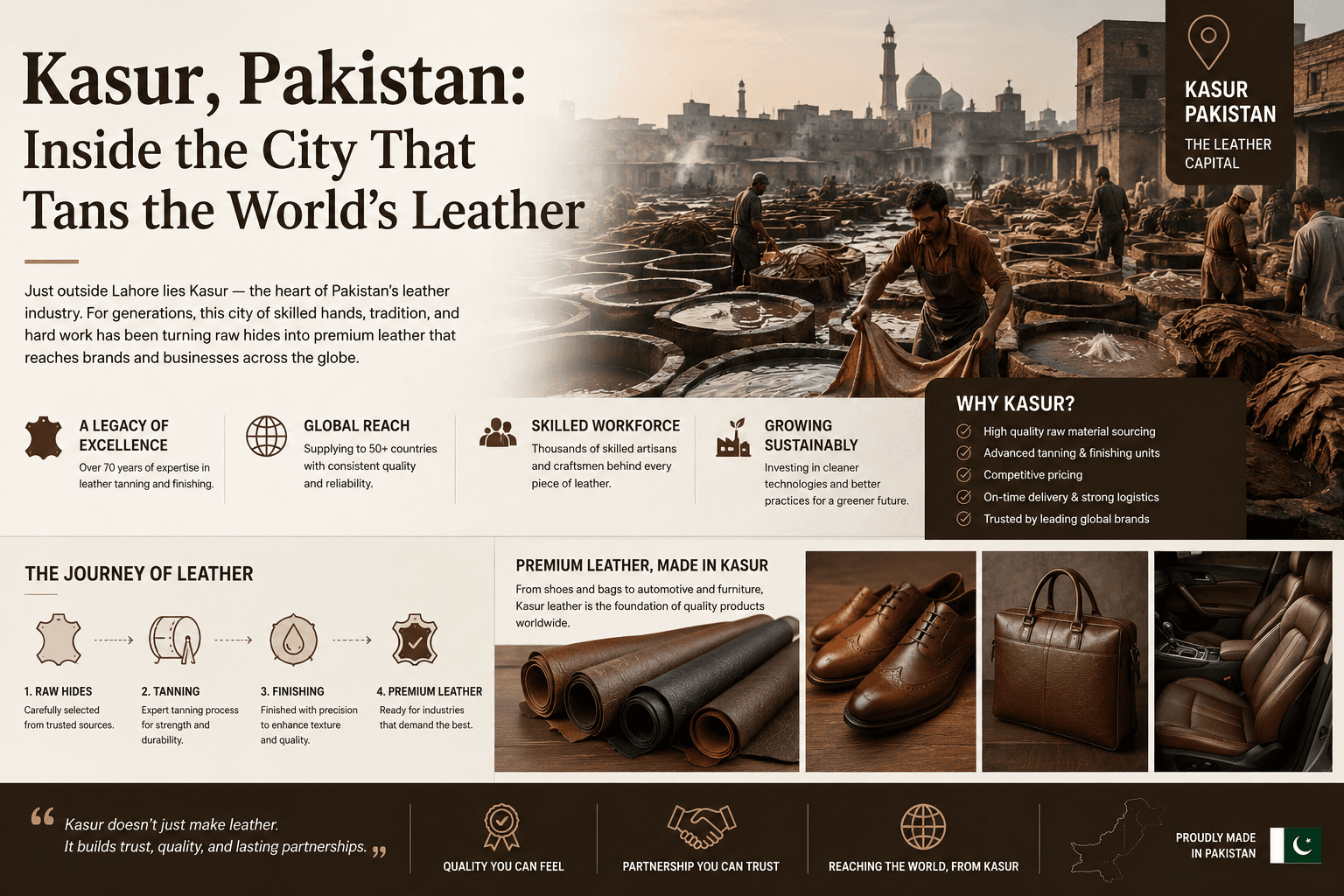
Pakistan offers a rare combination for leather buyers: competitive pricing, decades of tanning craftsmanship, and a raw material base fed by one of the largest livestock populations in the world. Cow, buffalo, and goat hides are processed locally, which means shorter supply chains and more control over quality compared to sourcing raw hides and tanning them elsewhere.
Kasur specifically has over 200 tanneries in a small geographic radius, most of them family-run businesses with two or three generations of experience. This concentration means buyers can access a wide range of finishes, thicknesses, and tanning methods (chrome, vegetable, semi-aniline) without needing to work with multiple countries.
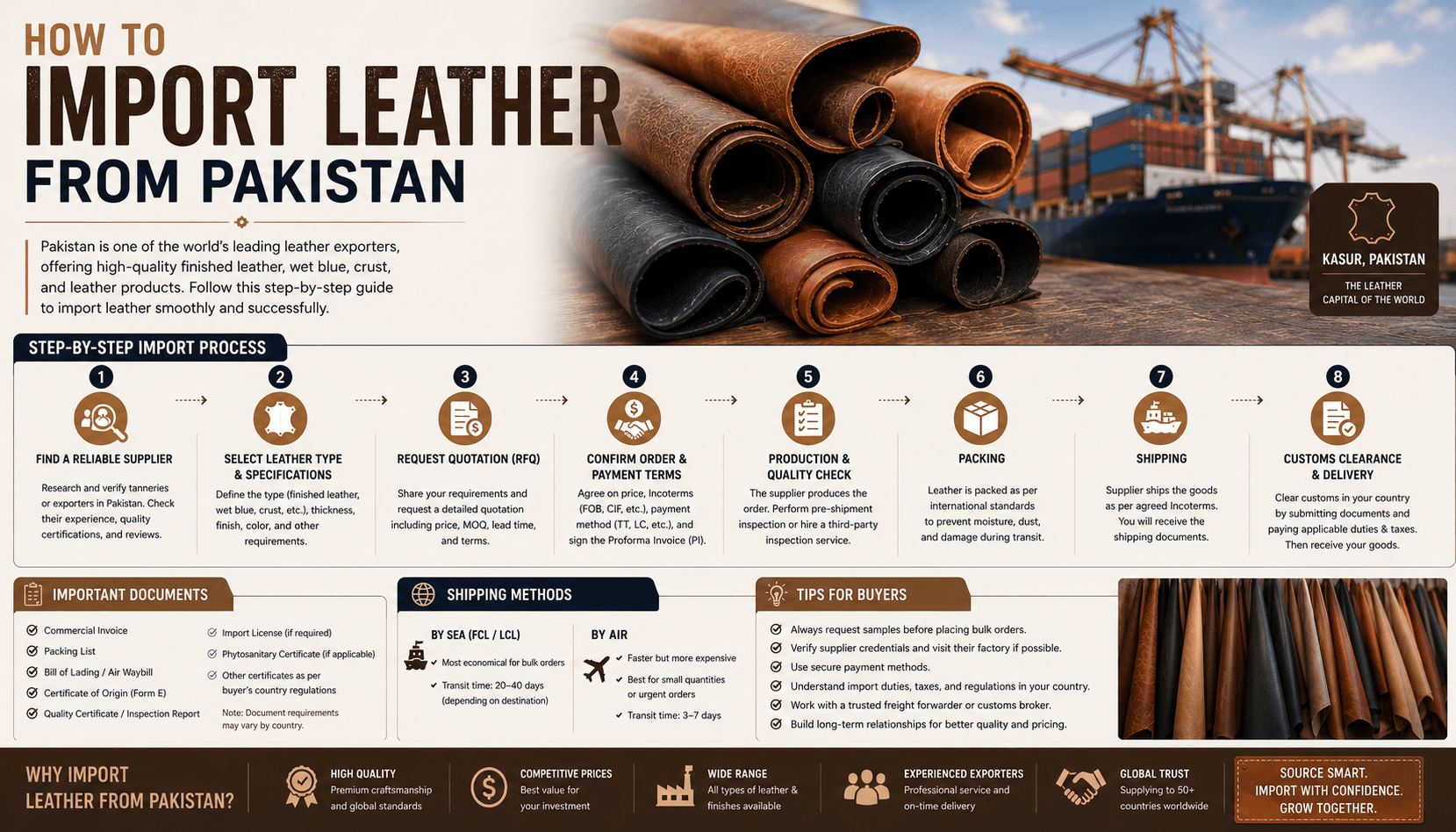
Step 1: Define Your Specification
Before reaching out to any supplier, have these details ready:
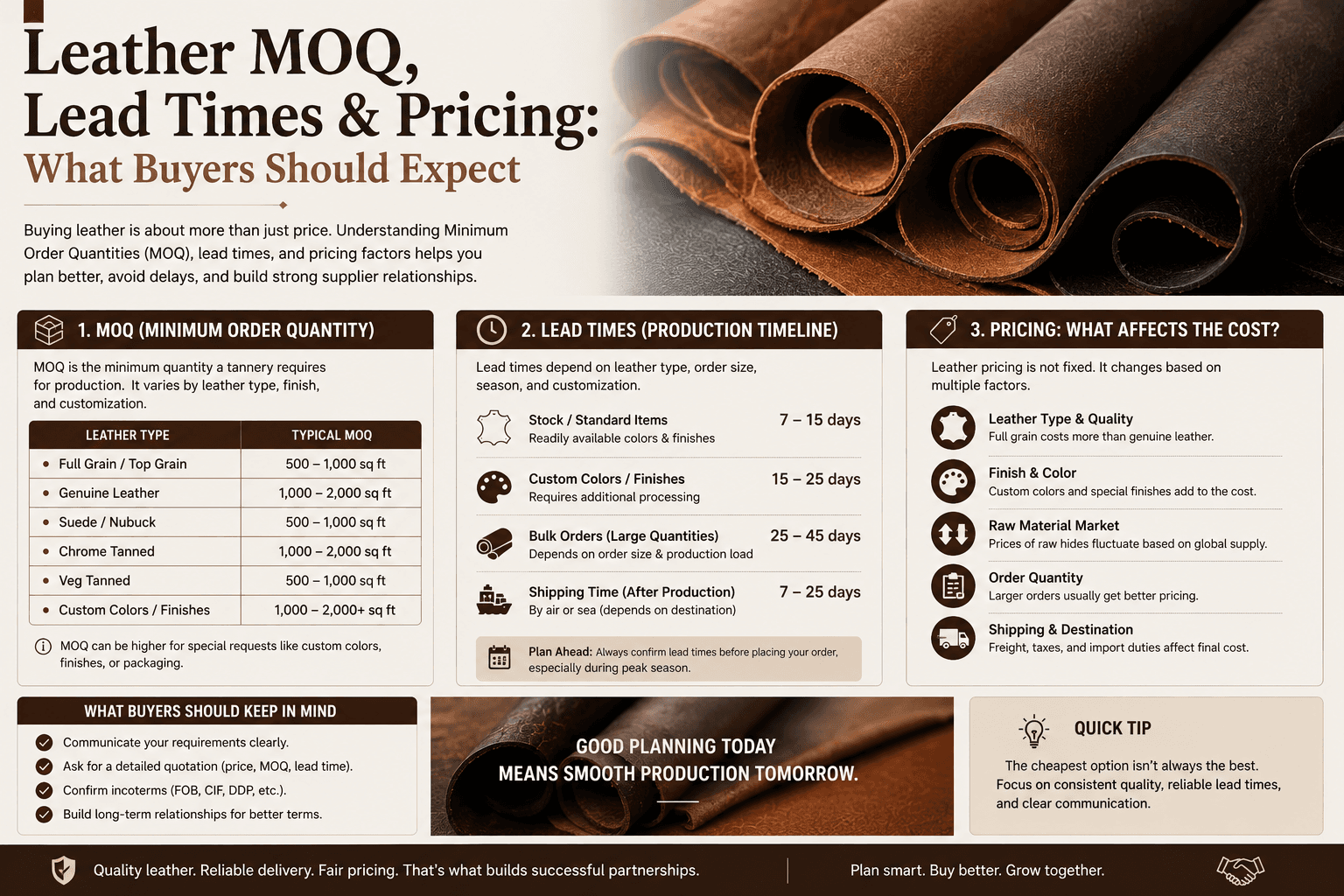
- Leather type: cow, buffalo, or goat - Finish: full-grain, nubuck, nappa, semi-aniline, aniline - Thickness: measured in millimeters (mm) - Tanning method: chrome or vegetable-tanned - End use: upholstery, footwear, bags and belts, garments, or gloves - Quantity: in square feet, and whether it meets typical MOQs (usually 800–2,000 sq ft depending on the article) A clear spec gets you an accurate quote faster and avoids back-and-forth delays.
Step 2: Request a Quote and Sample
A reliable supplier should respond with an itemized quote — price per square foot, MOQ, and lead time — typically within 24 hours. Before committing to a full order, always request a physical swatch or sample kit. Photos alone don't tell you how a hide feels, how it takes a fold, or how consistent the grain is across a batch.
Reputable Kasur-based suppliers ship samples within 3–7 days.
Step 3: Confirm Compliance and Certifications
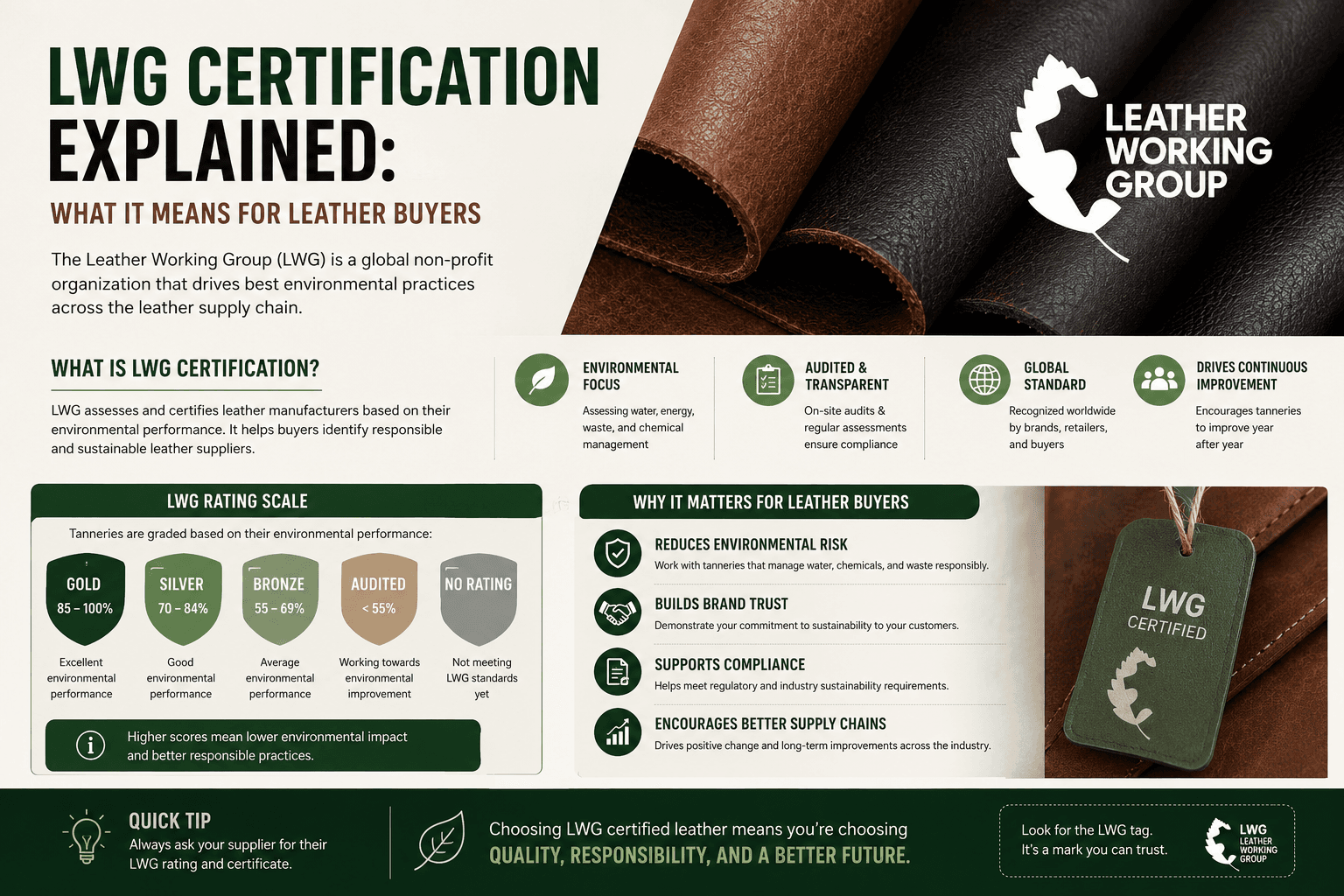
Two certifications matter most for leather buyers:
- LWG (Leather Working Group): certifies environmental and social compliance in the tanning process - REACH: confirms the leather meets EU chemical safety regulations, particularly around chromium VI content Ask your supplier directly which certifications their tannery holds, and request documentation — not just a verbal confirmation.
Step 4: Production and Quality Control
Once you confirm the order, production typically takes 2–4 weeks depending on the article and quantity. During this stage, ask whether your supplier offers:
- Timestamped QC photos of your actual hides (not stock images) - A documented inspection checklist — defect count per square foot, colour match tolerance, thickness verification - Visibility into production status without needing to chase updates over email This is where most import problems happen — not in the tanning itself, but in the lack of transparency between order confirmation and shipment. Buyers who can't see their actual hides until the container arrives are taking on unnecessary risk.
Step 5: Shipping and Incoterms
Leather is typically exported under standard Incoterms — FOB (Free on Board) is common from Karachi port, with the supplier handling export documentation. Confirm upfront:
- Who handles freight booking - Export documentation timeline - Estimated transit time to your destination port ## Common Mistakes First-Time Buyers Make
1. Skipping the sample stage to save time — this almost always costs more later in rejected shipments. 2. Not asking about defect grading standards — "good quality" means different things to different tanneries; ask for a numeric standard (defects per square foot). 3. Assuming all Kasur tanneries are equal — the region has 200+ tanneries with wide variation in equipment, compliance, and consistency. Vetting matters. 4. Not clarifying MOQ before requesting a quote — this wastes time on both sides. ## Final Thoughts
Importing leather from Pakistan can offer real cost and quality advantages, but the buyers who do it successfully treat it like any serious sourcing relationship: clear specs, documented quality standards, and visibility into the process from inquiry to freight. If your supplier can't show you the hide before the balance is due, that's a sourcing risk worth reconsidering.